Curly and Dense Coats: Why Regular Maintenance Between Grooms Matters
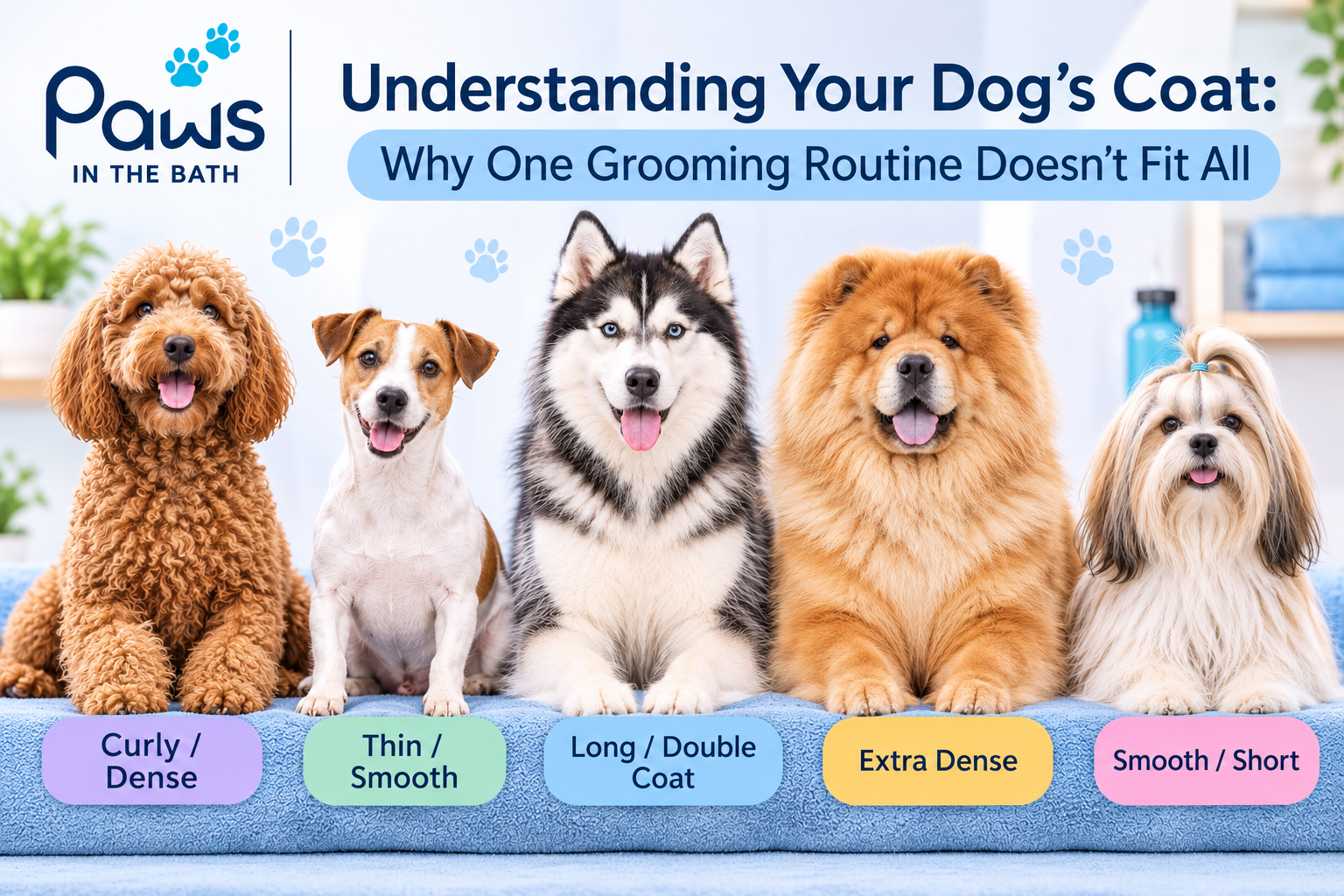
If you share your home with a Poodle, Goldendoodle, Cockapoo or another dog with a wavy or curly coat, you probably already know how quickly tangles can form between grooms.
Curly and dense coats have unique maintenance requirements. Their texture and structure can trap loose hair, encourage tangles, and allow small knots to develop into larger mats if they aren't addressed regularly.
While professional grooming plays an important role in keeping these coats healthy and manageable, what happens between appointments matters just as much.
At Paws in the Bath (PITB), we believe that understanding your dog's individual coat is the first step towards creating a grooming routine that works. Here's what pet parents should know about maintaining curly and dense coats at home.
Why Curly and Dense Coats Are More Prone to Matting
Unlike smooth coats, where loose hair can fall away more easily, curly coats tend to hold shed hair within their curls.
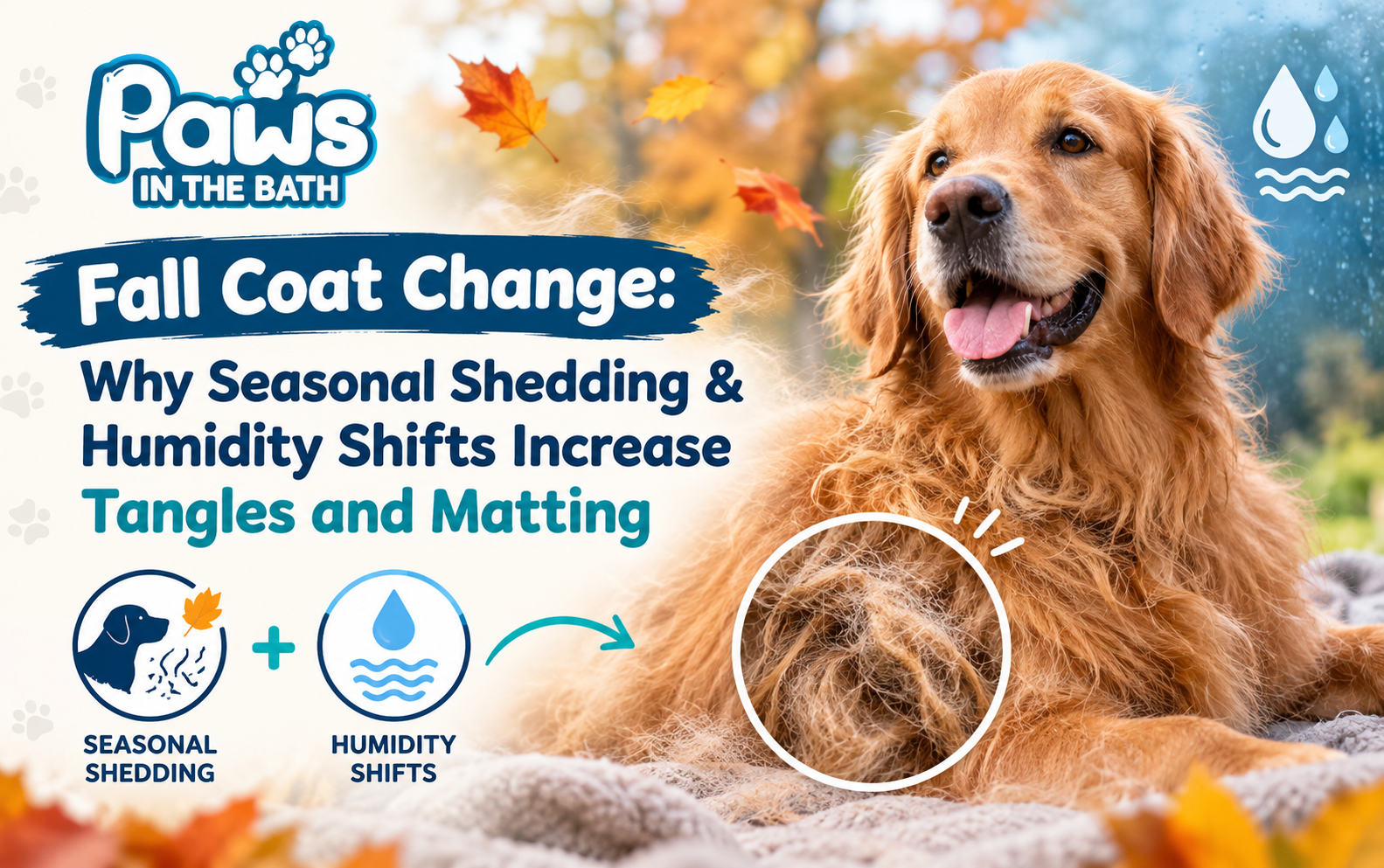
As your dog moves, plays, and goes about their daily routine, loose strands can become caught in the surrounding hair. Over time, these strands mix with existing curls and create small tangles.
Without regular brushing, these tangles can tighten and develop into mats.
Friction makes the problem worse. Areas where your dog's hair regularly rubs against itself, their skin, or accessories are particularly vulnerable.
Common trouble spots include:
- Behind the ears, where hair can become tangled through everyday movement.
- Under the front legs and around the armpits, where body movement creates friction.
- Around the neck and chest, particularly where collars and harnesses sit.
- Along the belly, inner legs, and hindquarters.
- Around the tail, where longer curls can easily collect tangles.
For curly-coated dogs, preventing these small knots from developing is much easier than managing established matting later.
Brushing Through the Coat Matters More Than Brushing the Surface
One of the most common at-home grooming mistakes is brushing only the visible surface of a curly coat.
Although this can make the coat look smooth and fluffy, it doesn't necessarily remove tangles closer to the skin.
The goal is to work through the coat in sections rather than simply brushing over the top.
Here are a few helpful habits to establish:
Part the coat and brush in small sections
Gently part the hair so you can see the skin. Brush through one small section at a time, working through the hair close to the skin and out to the ends. Use light strokes and avoid scraping the skin or pulling on knots. This helps you catch tangles hiding beneath the fluffy top layer.
Check your work with a comb
After brushing a section, a suitable metal grooming comb can help identify smaller tangles the brush may have missed. Ideally, the comb should move through the coat without catching.
Pay attention to friction-prone areas
Don't focus exclusively on your dog's back and sides. Spend extra time checking behind the ears, under the legs, around the chest, and beneath collars or harnesses.
Your groomer can recommend suitable brushes and combs, along with a brushing technique that matches your dog's particular coat.
Remember, brushing frequency also matters. Longer curly coats generally require more frequent attention than shorter, regularly maintained styles.
Check Under Jackets and Harnesses After Walks
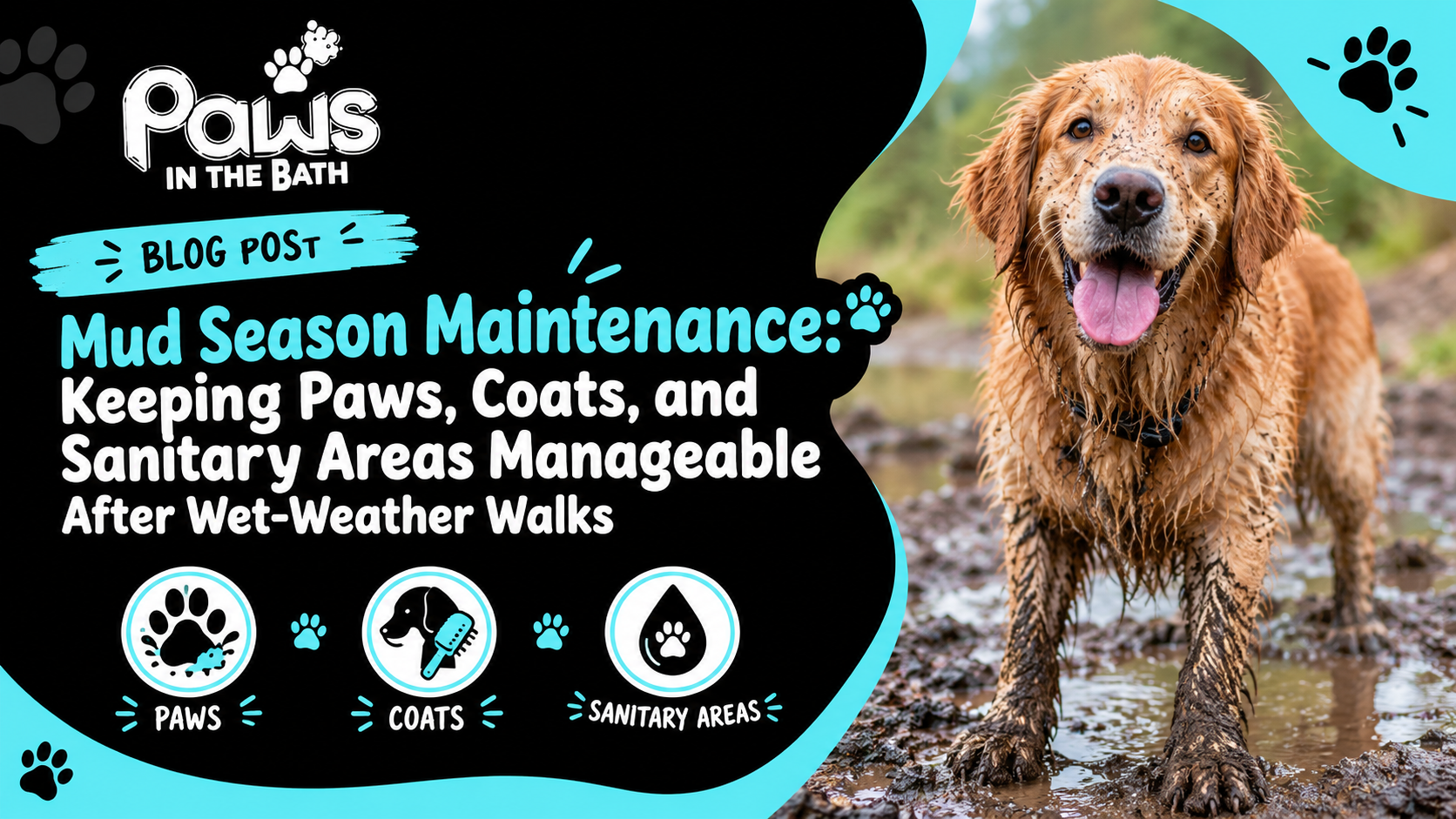
Winter jackets, sweaters and harnesses can rub against wavy or curly coats and create tangles. After a walk, take off your dog’s jacket or harness and check where the fabric and straps sit, especially across the chest and under the front legs. Dry any damp areas and gently brush out small tangles before they tighten into mats.
Winter coat care isn't about avoiding jackets altogether. It's about balancing your dog's comfort in colder weather with the additional maintenance their coat may need.
Does Coat Length Affect How Often You Need to Brush?
Absolutely, a longer curly coat can look beautiful, but it generally requires more consistent home maintenance.
The additional length gives loose hair and individual strands more opportunity to catch, twist, and form knots. Longer coats also require more attention around the legs, belly, ears, and other high-friction areas.
Keeping the coat at a shorter, manageable length can make everyday brushing considerably easier.
However, shorter doesn't mean maintenance-free. Curly hair can still trap loose strands and develop tangles even when regularly trimmed.
This is why the right grooming style should consider more than appearance. Your available time, your dog's lifestyle, coat condition, and ability to tolerate regular brushing all play a role.
A practical coat length is one that helps your dog stay comfortable while remaining manageable between professional appointments.
When Is It Time to Visit a Professional Groomer?
Regular at-home brushing is essential, but it doesn't replace professional grooming.
If you notice that tangles are becoming more frequent, the coat feels difficult to comb through, or certain areas are repeatedly developing mats, it may be time to bring your dog's next grooming appointment forward.
Tight or extensive mats should not be pulled apart or cut out at home with scissors. Mats can sit very close to the skin, making removal difficult and potentially causing injury.
A professional groomer can assess the condition of the coat, determine what can be managed comfortably, and recommend the appropriate approach.
At Paws in the Bath, our coat-based grooming menu helps make that decision easier.
For many Poodles and Doodle mixes that require regular haircuts and overall coat maintenance, a Full Service Groom is often a suitable option.
When a coat needs additional attention beyond the standard service inclusions, Additional Coat Work may also be appropriate. This can involve extra brushing, scissoring, or de-matting, depending on the individual dog's coat condition and comfort.
The right combination isn't automatically the same for every curly-coated dog. Our groomers consider the condition of the coat and the maintenance it needs before making recommendations.
The 1:1 Care Advantage: A Grooming Routine That Works for Your Dog
At Paws in the Bath, we believe good grooming starts with a conversation.
Two Goldendoodles can have very different coat textures, lengths, densities, and maintenance requirements. One may need frequent brushing and regular professional trims, while another may be more manageable with a shorter coat and a slightly different appointment schedule.
That's why we take an individual approach to grooming.
During your appointment, we encourage you to share:
- How often you're able to brush your dog at home.
- Which areas tend to develop tangles.
- Whether your dog regularly wears sweaters, jackets, or a harness.
- Your preferred coat length and any changes in coat condition.
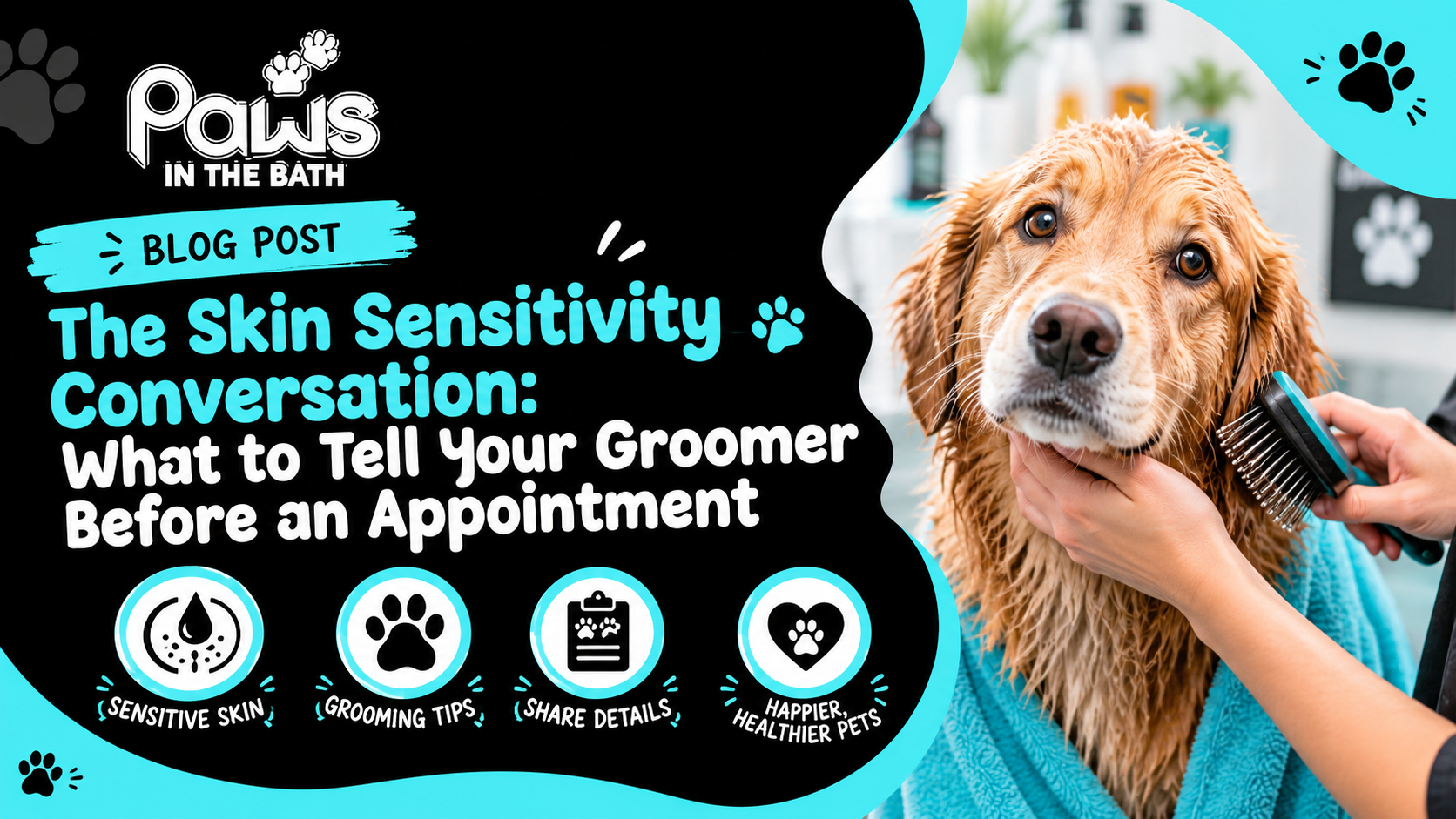
- Any discomfort or sensitivity you've noticed during brushing.
These details help our team make personalized recommendations and discuss a maintenance routine that works for both you and your dog.
Our goal isn't simply to achieve a beautiful finish after every appointment. It's to help you maintain a comfortable, manageable coat between visits.
The Nail Trim Reminder
Maintaining a wavy, curly or dense coat takes consistent care at home and regular professional grooming. Alongside brushing and coat maintenance, routine nail trims and grinding are also an important part of keeping your dog comfortable and well-maintained between visits.
At Paws in the Bath, we believe the right grooming routine starts with understanding your dog's individual needs. Our team is here to help you find a balance between professional care and manageable at-home maintenance.
Ask your groomer when your dog is due for their next visit, and book ahead if you would like an appointment before the holidays.
Paws in the Bath – Your Best Friend Is Our Favourite Client.